Showing posts with label Medical Device Sales Representative. Show all posts

Tuesday, August 19, 2014

Successful Medical Device Sales: How to Uncover Your Prospects’ Pain to Get Them to Buy


By Rick Fromme

A Pain That I'm Used To
A Pain That I'm Used To (Photo credit: Wikipedia)
One of the biggest emotions we have is pain or discomfort. When medical sales reps can uncover their clients’ poignant pain and offer a solution to remove that pain, they’re more likely to get the deal. (Incidentally, in a subsequent blog, I’ll discuss how job candidates and interviewees can directly apply this proven methodology during their interviews to maximize their results.) 


People buy emotionally and make decisions intellectually.  That is, people often make buying decisions from an emotional, non-rational basis, whether they realize it or not.  Successful medical device sales reps can benefit from understanding and utilizing this concept to close more sales consistently.

One of the biggest emotions we have is pain or discomfort. When medical sales reps can uncover their clients’ poignant pain and offer a solution to remove that pain, they’re more likely to get the deal. (Incidentally, in a subsequent blog, I’ll discuss how job candidates and interviewees can directly apply this proven methodology during their interviews to maximize their results.)  

After obtaining a legitimate lead, first things first, you need to build a rapport. This is crucial. In order to help establish a rapport, you need to learn more about the key decision makers who will ultimately approve the purchase order (administrator, hospital manager, OR manager, purchasing department head, etc.) and his or her hospital, department, etc.  Research time: Find out as much about this individual (or individuals) as possible so that when you do meet them, you can build upon some avenues of commonality. You need to personally or professionally identify with the prospect. Whether it’s a mutual acquaintance, graduated from the same school, share similar hobbies, belong to the same professional groups, attend the same house of worship, etc., you have about 15-30 seconds for a prospect to size you up and determine if they’re going to like you. 


The second step is to have a conversation to probe and determine what are their true needs and pains. The key ― by running them through a series of probing questions ― is to identify the emotional pain they may feel towards the issue you’re discussing and getting them to tell you what would be the ideal solution. You don’t want to go through all the features and benefits of your product if it doesn’t address a prospect’s true interests and/or needs.  For example, let’s say someone learns I’m in the marketplace for a boat. So they contact me about their various motorboats, telling me how fast they are, discuss various outboard motor options, the boats’ amenities such as diving platforms, if they can rigged for deep sea fishing, etc. Right?

Wrong. Turns out, I’m in the market for a small, easy-to-operate, personal sailboat. 

Sailboat GBR 50816, Sada, Galicia (Spain)
Sailboat GBR 50816, Sada, Galicia (Spain) (Photo credit: Wikipedia)
I’m a big proponent of a system developed and taught by Sandler Training. What I learned in Sandler Training is that after building rapport, before you start talking about your product and what it has to offer, you need to back up and start asking probing questions. You’re trying to find out what their pain or discomfort is. By locating their pain and learning how it makes them feel, they’ll tell you what happened to them in the past, what other products they’ve purchased, what their concerns are, etc. You have to expose and understand those underlying issues, similar to a psychologist who’s trying to help a client experiencing emotional difficulties. 

At that point, once you’ve established what their pain points or concerns are, you can position your product and/or services to eliminate their pain. When doing so, you’re predominately going to highlight the specific features and benefits of your product and/or service that are going to make their pain go away, whether it’s customer service, costs, features and benefits, cross-specialty utilization, ease of use/training, etc. You’ll predominately share those key elements of your product and/or service that are going to make them feel better. 

It’s actually kind of like an interview, with you taking judicious notes. You ask them what they want and why, and, if you’ve followed through with the above, they’ll tell you. Hence, when you create your proposal, it will address exactly what they told you they wanted, based on their emotional pain or concerns. Chances are, if you demonstrate how your products or service can alleviate their pain, you’ve clinched the deal.  Never put together a proposal or bid without understanding why they want to buy from an emotional standpoint.


Here’s a real-life example from when I was a successful medical device sales rep at Medtronic:

One of the products I used to sell was image-guided surgery (IGS) systems. This equipment allows surgeons in a variety of specialties to three dimensionally track surgical instrumentation while navigating through high-risk anatomical areas such as the brain, sinus cavities, spine, and other delicate regions. It’s like an internal GPS system. These systems are fairly pricey, ranging between $180,000 to  $500,000+.


One day, I received a general lead from a hospital O.R. director in southeast Georgia that wanted to purchase an image guided stem. At that time, Medtronic was just one of many companies offering this sophisticated device, along with GE, Stryker, Brainlab and others. 

I knew this was a C- Level decision, so I called the hospital’s administrator several times ― for this story, I’ll call him “Mr. Jones”― but he wasn’t returning my calls. So I reached out to Mr. Jones’ secretary who told me to send in a bid for one of my firm’s IGS systems  just as my other competitors already had. I said, “Sure, but I’d like to drop the proposal off in person so I can briefly introduce myself to Mr. Jones.” She made an appointment for the following week for us to get together. 

English: Georgia Bulldogs helmet. Made with Ph...
 Georgia Bulldogs helmet. Made with Photoshop. (Photo credit: Wikipedia)
I still didn’t know exactly what Mr. Jones wanted, that is, what his specific emotional pains or concerns were regarding this piece of capital equipment. In order to discover these, I needed to talk to him.  But before  doing so, I needed to learn more about Mr. Jones. I did my  research and found out he’d graduated from the University of Georgia, that he was a big football fan, was a strong alumni supporter, etc. 

So when I went to visit him, I wore a red shirt and black pants. No kidding. And, of course, once I was in his office, we immediately started talking about the Georgia Bulldogs, college football, the SEC, and the like. In talking with him, I also made certain comments and observations that would help establish some type of common ground between us.  


Eventually he asked me, “Where’s the bid?” 


Keeping in mind that several other companies had already submitted theirs, I replied, “There were several bids I could send, but I wasn’t sure which one would be best. However, I’m happy to fax you the bid once I know exactly what it is you want.” With that, I began my interview process by asking probing questions to ascertain his concerns (i.e., “pains”). 
BellcoFormula in
BellcoFormula in (Photo credit: Wikipedia)

“We’ve purchased expensive capital equipment before because our docs said they’d wanted it,” Mr. Jones explained. “But several times these investments just turned into large and costly ‘paperweights’ that nobody uses,’” he said ruefully. He then went on to mention some of his other pains, such as experiencing poor customer service with previous suppliers and having to moderate multi-specialty requests for similar equipment. 


“You really should only buy what you’re going to be comfortable with,” I responded, after carefully noting his issues with previous expenditures. 

My meeting turned out to be fairly comprehensive, where Mr. Jones ended up telling me exactly what he wanted and why, all the way down to the terms, pricing, guarantees, service requirements and other key details. “Give me a day or two and I’ll have your bid,” I said, exiting his office. “And go Dawgs!” 


As promised, a couple of days later, I drove back up to Georgia to personally drop off the bid he’d requested. 

English:
 "$!" in Old Script font. Italiano: "$!" nel carattere Old Script. (Photo credit: Wikipedia)
After taking a few moments to look it over, Mr. Jones looked up at me and said, “Rick, this is exactly what we want.” It’s as if he’d forgotten about our previous conversation. For in creating the bid, I essentially gave him precisely what he needed that would address his needs and “pains” that I’d uncovered.  He then told me he was going to sign a requisition for my IGS system.  In response, I asked him what he was going to do if one of the competitors came back around trying to get his business. He answered with a Cheshire Cat-like grin, “I haven’t spoken to them and only received bids from them. I’ve not spoken to any of them. But if they come sniffing around, I’ll make them go away.” And I landed the deal. (No small feat in the competitive world of medical capital equipment sales). 

To summarize the steps I took to secure this lucrative sale: 


  • Research your client
  • Build rapport
  • Ask probing questions
  • Identify the client’s “pains” (Why do they want to buy this product?)
  • Discover what’s in it for them personally/professionally (i.e., gaining respect for championing a product into the hospital)
  • Create a proposal customized to their specific needs
  • Coach them how to handle your competition after they’ve committed to you

About the Sandler Selling System®


David H. Sandler developed his proprietary methodology — an innovative, non-traditional selling system —in the late 1960s, and subsequently created the concept of “reinforcement training” to support it.  From that foundation, he then created a series of proven sales training programs for small- and mid-sized companies and Fortune 500 corporations. He went on to found the Sandler Sales Institute®. Sandler provides both basic and advanced selling methods, strategies and tactics that are marketplace proven across a wide variety of sales. It then provides ongoing support to reinforce its principles until they’re mastered. This powerful reinforcement training is Sandler’s key point of difference from all other training in the marketplace.

The firm changed its name to Sandler Training® in 2008, to more accurately reflect the diversity of its training offerings, which have expanded beyond sales training to include management, leadership, negotiating skills, customer service, as well as executive coaching and mentoring.  It has now grown into an organization that dominates the global training market, with more than 200 offices worldwide, providing instruction in 27 languages.

In this article, I discussed the importance of why and how successful medical device sales representatives should discover a prospect’s “pain” in order to provide meaningful solutions to alleviating it. I gave a personal example of how I effectively closed a major medical device sale using these techniques established and taught by Sandler Training. I also briefly provided some information about Sandler Training. If you found this article useful, please feel free to share and repost it. If you have any questions or comments, as always, I’m eager to read them.

Rick Fromme combines entrepreneurial enthusiasm with an insider's knowledge of the medical industry to co-found MedMasters.com. Both his drive and perspective helps provide health care professionals with a superior mechanism with which to communicate, network and market their strengths. Prior to founding MedMasters.com, Rick operated a highly successful medical device distributorship. Other milestones in his 12-year career in the medical industry include a key position at a medical device start-up company that was later sold to the Ethicon Endo division of Johnson & Johnson. You may also reach Rick by connecting with him on FacebookTwitterGoogle+LinkedIn and YouTube


Friday, June 13, 2014

Medical Device Sales: Fascinating, Captain! Part 3

Extra, extra! Read all about it! 

MDEA announces its 2014 medical technology winners!


By Rick Fromme

If you’re a medical device sales professional, or you’re looking into transitioning into this exciting field of health care, then this blog’s for you. In our ongoing series of highlighting advanced medical technologies across multiple disciplines (i.e., imaging, diagnostics, surgical, consumer, etc.), we strive to introduce to some of the most innovative and life-changing products being produced world-wide today.


Breaking News

You may recall our second edition of “FascinatingCaptain!” featured the award-winners of the 2013 Medical Device and Engineering Awards (MDEA). As stated by “MD+DIMagazine” about its prestigious award ceremony: 

“The Medical Design Excellence Awards (MDEA) competition is the medtech industry's premier awards program recognizing the highest caliber medical devices and diagnostic products on the market. The MDEA program recognizes the achievements of medical device manufacturers, their suppliers, and the many people behind the scenes who are responsible for the cutting-edge innovations that are saving lives, improving patient healthcare, and transforming medtech worldwide — one innovation at a time. Since its inception in 1998, the competition has honored over 600 groundbreaking products.” 

Earlier this week, during its annual MDEA Conference and Exposition in New York City, “MD+DI Magazine” announced its international award winners for the most compelling and innovative medical devices for 2014. Below are the Gold winners in each of the award ceremony’s 11 distinct categories:

Critical Care & Emergency Medical Products

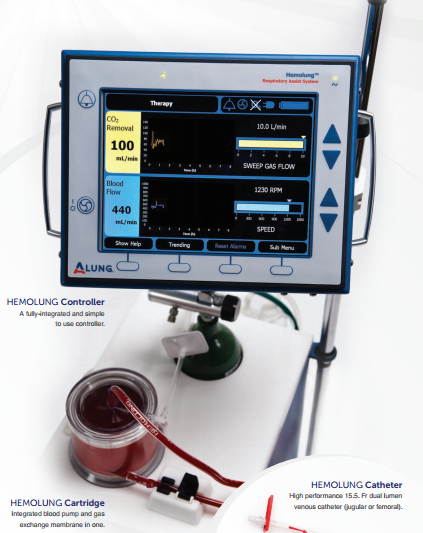
Hemolung RAS extracorporeal carbon dioxide removal system. Manufactured and submitted by ALungTechnologies Inc. (Pittsburgh). Hemolung RAS provides respiratory dialysis; a simple, minimally-invasive form of extracorporeal carbon dioxide removal (ECCO₂R) that acts as an alternative or supplement to mechanical ventilation in cases of acute respiratory failure. 

Dental Instruments, Equipment & Supplies

Solea CO₂ dental laser system for hard and soft tissue. Manufactured by Convergent Dental Inc. (Natick, MA). At 9.3 μm, Solea is the first CO₂ laser system ever cleared by the FDA for hard and soft tissue ablation. Solea is fast, precise, virtually noiseless, and anesthesia-free for the vast majority of procedures. 

Drug-Delivery Devices and Combination Products

PROPEL mometasone furoate implant and PROPEL mini mometasone furoate implant. Manufactured and submitted by
Intersect ENT (Menlo Park, CA). PROPEL and PROPEL mini dissolvable steroid-releasing implants reduce the need for additional surgical procedures and for oral steroids, which can have serious side effects for patients suffering from chronic sinusitis.

General Hospital Devices & Therapeutic Products


LuViva Advanced Cervical Scan is a point-of-care, noninvasive cervical disease detection device. Manufactured by Guided Therapeutics Inc. (Norcross, GA). LuViva is a test for early detection of the disease that leads to cervical cancer. It does not require a tissue sample.  http://www.guidedinc.com/

Implant & Tissue-Replacement Products

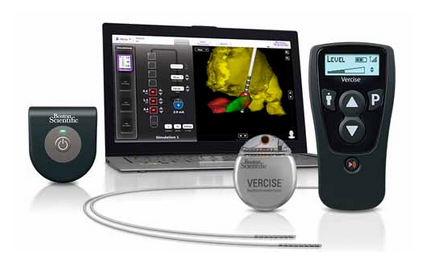
GUIDE DBS programming planning and visualization system for deep brain stimulation (DBS). Manufactured and submitted by Boston Scientific Corp. (Natick, MA). GUIDE DBS is a software program that creates a 3D image of a patient’s deep brain anatomy and the relative location of the implanted lead. A model of the volume of activated tissue allows the clinician to intelligently optimize stimulation parameters.


Invitro Diagnostic Products & Systems

AtomoRapid HIV (1&2) integrated rapid antibody test. Manufactured and submitted by Atomo Diagnostics PtyLtd. (Sydney, Australia). AtomoRapid HIV is the first integrated rapid test for detection of HIV 1&2 using blood. The AtomoRapid blood testing platform can accommodate test strips for a wide variety of condition such as celiac disease, allergies, and infectious diseases such as malaria and HIV. The device delivers better clinical outcomes for patients and health care providers by enabling simpler, safer and more accurate testing in a field or at home.

Medical Product Packaging, Graphic Instructions & Labeling Systems

SoTube/SoSafe double-sterile barrier packaging. Manufactured and submitted by SeleniumMedical  (La Rochelle, France). SoTube/SoSafe are two innovative solutions— nested tubes based for implants in a double-sterile barrier packaging. This ensures nurses and surgeons easy handling of package and implants, as well as a pioneer “No Touch” approach right up to the point of surgery.

Over-the-Counter & Self-Care Products

AEROBIKA oscillating positive expiratory pressure therapy system. Manufactured and submitted by Trudell Medical International (London, Canada). The AEROBIKA oscillating PEP device helps loosen and remove mucus build-up in the lungs.

Radiological & Electromechanical Devices

AIRO Mobile Computed Tomography (CT) System. Manufactured and submitted by MobiusImaging LLC (Ayer, MA). The AIRO Mobile CT integrates advanced imaging technologies into existing medical workflow and provides the clinician with procedural flexibility as well as real-time CT imaging information where and when it’s needed.

Rehabilitation & Assistive-Technology Products

Vector Gait and Safety System. Manufactured and submitted by Bioness Inc. (Valencia, CA). The Vector Gait and Safety System is a ceiling-mounted robotic technology designed to improve patient mobility and functional independence by tracking movement and offloading a precise amount of body weight during rehabilitation. 

Surgical Equipment, Instruments & Supplies

Zip Surgical Skin Closure. Manufactured and submitted by ZipLine Medical Inc. (Campbell, CA). Zip is a noninvasive skin closure alternative to sutures and staples for surgery and lacerations, offering time-savings, better cosmesis, lower infection risk, and greater patient comfort. It’s easy to apply and patients can remove it at home. 


Of those Gold winners cited above, Atomo Diagnostics’ AtomoRapid HIV was chosen as this year’s overall “Best in Show.” 

AtomoRapid


MDEA’s “Lifetime Achievement Award” winner was Dean Kamen, the inventor of the new, FDA-approved DEKA prosthetic arm.

It took eight years of research, but Kamen, the inventor of the Segway “scooter,” created the closest thing to a replacement for amputated arms — and industry pundits acknowledge it’s a game changer. It allows users to zip up coats, gently handle eggs and drink from a bottle of water, among other tasks.

Developed by Kamen’s DEKA Research and Development, along with funding from the DefenseAdvanced Research Projects Agency (DARPA), the device can be fitted for people with amputations at the shoulder, upper arm or lower arm, but not at the elbow or wrist. (For more information on some of the cool projects DARPA funds or sponsors, read our blog, “TheNext Generation — Putting Your Best Robot Forward.”)

Nicknamed “Luke” after the “Star Wars” hero who lost his hand in a light-saber duel, Kamen’s device works by picking up on the electric signals near the point of amputation and translating those to the prosthetic.  It’s a transparent replica of a human arm and hand, complete with fingers and a thumb. 

“Luke” gives users the ability to perform multiple functions at one time, an advance over most available prosthetics.The human brain automatically calibrates the amount of grip needed to pick up objects, and knows to adjust strength in order to handle a coin as opposed to a book. The “Luke” arm does the same, switching between six different grips as the wearer decides. Being able to control several joints at the same time also increases users’ range of motion, allowing them to open a lock with a key, or chop food to prepare a meal.
                                                        "Luke," the DEKA Prosthetic Arm

In this article, I shared with you the hot-off-the-presses Gold award and special category winners of this year’s MDEA medtech awards, which was held in New York City earlier this week. If you’re in medical device sales, I hope you found this article especially useful and informative. Please leave a comment below and share this with your colleagues and friends.

Rick Fromme combines entrepreneurial enthusiasm with an insider's knowledge of the medical industry to co-found MedMasters.com. Both his drive and perspective helps provide health care professionals with a superior mechanism with which to communicate, network and market their strengths. Prior to founding MedMasters.com, Rick operated a highly successful medical device distributorship. Other milestones in his 12-year career in the medical industry include a key position at a medical device start-up company that was later sold to the Ethicon Endo division of Johnson & Johnson. You may also reach Rick by connecting with him on Facebook. 


Wednesday, March 12, 2014

A Day in the Life of a Medical Device Sales Representative

By Rick Fromme

English: Photograph of The Beatles as they arr...
The Beatles arriving in NYC in 1964  (Photo credit: Wikipedia)
Welcome to the brand new MedMasters’ blog series, “A Day in the Life.” I thought this theme is highly appropriate for our readers for two reasons. First, as most of you know, 2014 marks the 50th anniversary of the Beatles "invasion" of 
North America. The Fab Four’s impact on our music and modern culture at-large is indelible. More directly for health care professionals, the series is designed to give insight into the daily 
functions, responsibilities, positive attributes, and qualifications of various specialties in the ever-growing health care industry.  Since my professional background is in medical device sales, I thought I’d start with “A Day in the Life of a Medical Device Sales Representative.” 

A typical day involves promoting your company’s capital equipment, implants, disposable products, surgical instruments, or biologics  to many doctors, area hospitals and surgery centers. Often times a rep will be required to get buy-in from different levels and such as  physician/surgeons, administrators,  the OR staff and purchasing agents. Particularly with capital equipment, implants, certain surgical instruments, and biologics, the medical device rep must be comfortable interacting with, and in many cases, educating physicians about the use of their products. Likewise, in addition to training physicians and surgeons, a rep will need to train the OR staff as well before a surgical case can be performed.

Operating Room
Operating Room (Photo credit: Jeff Kubina)
Many immediately recognize the opening lines to the second section of “A Day in the Life” that Sir Paul sings: “Woke up, fell out of bed, dragged a comb across my head.” For reps who are frequently required to be in the OR, their day typically starts before dawn, often rising around 4 or 5 a.m., to be out the door an hour later.  For it’s the rep’s responsibility to be at the OR an hour or so before the first case starts. Sometimes they need to be there even earlier in the event they are bringing in equipment which will need to be safety checked through the biomedical department before taking it into the OR suite. Once there, the rep — who will need to change into scrubs like the rest of the OR team — helps the circulators and medical techs plan the case around the product and equipment that will be used and answer any questions about it. The rep is also available to answer surgeons’questions as well, however, they will not assist with the actual surgery. But the rep is there to answer any technical questions for the surgeon and OR staff as the case progresses.

If the equipment or instruments haven’t yet become part of the hospital’s inventory, then post-op, the rep must ensure the equipment is properly cleaned and sterilized to negate the possibility of inadvertently transporting any kind of infectious material out of the OR and back into the environment.
   
English: Sunrise picture taken out of a drivin...
Sunset picture taken out of a driving car (Photo credit: Wikipedia)
Unless there’s another procedure scheduled, the rep is free to don his or her salesperson’s garb to market the devices throughout their territory
At least that’s part of the remaining day. Some reps’ territories are quite large, sometimes hundreds of square miles. A rep may be in one area of their territory, following up on a sales presentation with one client, and receive a phone call from another hundreds of miles away that needs to ask some detailed technical questions and is requesting a personal visit. So along with having strong sales skills, time and geo-management skills are important. Traveling and being a road warrior is part and parcel of a sales rep’s life. The rep, if not reimbursed for gas and automobile/travel allowances, must keep accurate records of these, (and other) expenses as they are tax deductible.

In regards to selling, the rep must also be comfortable meeting, and sometimes socializing with professionals at different levels in the medical community. For example, a rep could meet with a hospital's administrators,
department heads, or purchasing agent.

Most reps have sales quotas they must meet on a weekly, monthly quarterly and annual basis. Since many reps often work on a commission-only basis, not meeting one’s quota has adverse professional and financial consequences. So if the rep isn’t selling, they’re not achieving his or her most important task.

English:
(Photo credit: Wikipedia)
From reading the above, one can readily see that a highly skilled and successful sales rep must have a number of different skills to perform his or her job well. The rep must have a strong background in the health sciences and biology. Knowing functional anatomy, physiology, biochemistry is important, too, as well as adhering to strict protocols involving sterile techniques and practices. Of  course, s/he must possess strong sales skills, but also soft skills such as the ability to effectively communicate with, and in some cases, teach and mentor a group of already highly educated medical professionals. They may also interact with administrators and other non-surgical/medical personnel. In certain situations, a rep may join these professionals in social engagements outside of the medical facility, such as at dinner, or another social outing. Again, strong interpersonal skills are imperative. The rep must also have strong organizational and time management skills in order to sell/service their product(s) throughout a given territory. And they should have a modicum of bookkeeping skills to enable them to keep track of expenses and other fiduciary issues.

Rick Fromme combines entrepreneurial enthusiasm with an insider's knowledge of the medical industry to co-found MedMasters.com. Both his drive and perspective helps provide health care professionals with a superior mechanism with which to communicate, network and market their strengths. Prior to founding MedMasters.com, Rick operated a highly successful medical device distributorship. Other milestones in his 12-year career in the medical industry include a key position at a medical device start-up company that was later sold to the Ethicon Endo division of Johnson & Johnson. You may reach Rick by connecting with him on FacebookTwitterGoogle+LinkedIn and YouTube

Enhanced by Zemanta