Showing posts with label Bureau of Labor Statistics. Show all posts

Monday, July 7, 2014

Health Care Careers: A Day in the Life of a Phlebotomist

By Rick Fromme

Why was the young vampire considered a failure? Because he fainted at the sight of blood. 

Yes, it’s natural to quip about vampires when thinking about venipuncture and phlebotomy.  It’s easy to get — shall we say, “stuck”? — in that mode of thought.  Especially since the previous article I’d posted was among our ongoing “Humerus Я Us,” series, I’m still in a mirthful mode about merry medicine.

But the “point” I want to stress is: Blood testing is a critical component in anyone’s overall health care, whether for assessment, benchmarking, the identification of disease, and other issues.  For aging adults — and that’s a majority of the U.S. population — blood testing is the most critical step to prevent life-threatening issues. From a battery of different blood tests, health care professionals can watch for and catch critical physiological changes before they manifest as heart disease, cancer, diabetes, multiple sclerosis, Alzheimer’s and other debilitating illnesses.

Blood tests can also help one attain a higher quality of life. For example, by monitoring levels of testosterone, estrogen and progesterone, one can take definitive steps to correct a depressive mental state, reduce abnormal obesity, improve memory, increase energy levels, and more.

Of course, the health care specialty that focuses on obtaining blood for these critical tests is phlebotomy. And, as I’d mentioned in my previous blog, “Health Care Jobs Outlook is Jammin’!” one of the top 20 career specialties that’s expected to grow exponentially is phlebotomy.

Medic Red Stewart performs a phlebotomy at a J...
Medic Red Stewart performs a phlebotomy at a JTF-GTMO medical clinic. (Photo credit: Wikipedia)
As with many health care specialties, according to the Bureau of Labor Statistics (BLS), the employment of phlebotomists is projected to grow 27% within the next decade, much faster than the average for all occupations.  

Phlebotomists draw blood for tests, transfusions, research, or blood donations. Some explain their work to patients and provide assistance when patients have adverse reactions after their blood is drawn. Phlebotomists work mainly in hospitals, medical and diagnostic laboratories, blood donor centers, and doctor’s offices.

In a hospital setting, phlebotomists receive orders from the various departments, then take the required tubes in their portable tray. Once in the patient’s room, they carefully identify the patient by their name, medical record number, and date of birth, before drawing the required specimens.  The carefully marked tubes are then returned to the lab and the requisite information for each is inputted into the computer. Then the tubes are delivered to the proper departments such as hematology, coagulation, chemistry, etc., for the techs to then result out the tests.

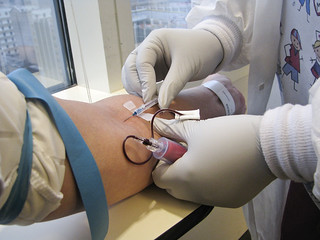
The actual venipuncture process consists of applying a tourniquet, selecting a vein, cleansing the skin, inserting a needle, and collecting blood for either testing or transfusion purposes.  Upon completion of collection, the needle is withdrawn into a safety device, which prevents re-use of the needle and accidental needle sticks. The needle is then discarded into a biohazard sharps container.


Depending upon a variety of factors that can affect the size and availability of patients’ veins, this process can go smoothly or sometimes needs to be repeated to obtain results. Many seniors, for example, have hard-to-find veins. Children, too, can sometimes prove difficult not only because of the smaller size of their veins, but their outwardly manifested fear factor of the venipuncture procedure itself.
Yet Another Bad Phlebotomy Job
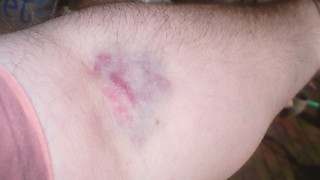
Yet Another Bad Phlebotomy Job (Photo credit: A.Currell)
Or sometimes it simply depends upon a phlebotomist’s skill level. For example, I had to give blood at my doctor’s office last month.  The first person tried two times, but missed or went through my veins altogether. After calling in another med tech/phlebotomist that did the third venipuncture, this one was finally able to obtain the required blood for my lab work.  Good thing, too; I didn’t want to be stuck in the doctor’s office all morning. (Sorry! Couldn’t resist.)


Phlebotomists perform a key diagnostic service in a wide range of health care settings. Depending upon what a patient’s condition is, their ability to obtain proper blood samples could ultimately be life saving. Another good part of the job, many phlebotomists say, is their time spent interacting with patients (and hopefully executing a flawless venipuncture/withdrawl). Especially in a large hospital setting or a major urban laboratory, the range of patients and personalities are quite varied.

Keep in mind that drawing someone’s blood, inserting a needle into their skin while the patient is conscious, is a fairly intimate process. There’s a certain unspoken trust level between the phlebotomist and patient. The patient/donor is trusting the phlebotomist to puncture their skin, obtain accurate and requisite amount of samples as rapidly as possible, while at the same time entrusting the phlebotomist to cause as little pain as possible during the procedure. 


Job Requirements & Training
True Blood
True Blood (Photo credit: Lori Greig)
To become a phlebotomist, one must have a high school diploma or G.E.D. Coursework is required, usually at community colleges, private colleges and even some hospitals. The training varies, typically three to six months. There are clinical hours one must also obtain; oftentimes these are encompassed in the program.  You should always look for an accredited program.


Upon completion, especially if one’s completed an accredited course track, then she or he can oftentimes get certified immediately. Or, after working for a requisite amount of hours, one can take the certification test. By becoming credentialed, phlebotomists demonstrate their competence to carry out their responsibilities, which in turn, allow them increased job prospects, higher salaries, and to gain the respect of other health care professionals. There are different certifying bodies such as The American Society for Clinical Pathology (ASCP), American Society for Phlebotomy Professionals (ASPT) and National Phlebotomy Association. Getting accredited is highly recommended to best further one’s career opportunities.

If a would-be phlebotomist is training at a health care facility, their coursework and training is usually variable, based on a combination of education, experience and on-the-job training.

In this article, I discussed the highly favorable job outlook for phlebotomists, described what their various
responsibilities are (predominately in a hospital setting), described the process of venipuncture, and also talked about educational requirements and credentialing. If you found this article useful, please feel free to share and repost it. If you have any questions or comments, as always, I’m eager to read them.

Combined Nuvola apps dict.png + VampireSmiley....
Combined Nuvola apps dict.png + VampireSmiley.png for use in enwiki novel stub tpl (Photo credit: Wikipedia)
Here’s something to sink your teeth into: From what many of my phlebotomist associates tell me about people’s "vain" attempt at humor, most don’t like being referred to as vampires. 

Rick Fromme combines entrepreneurial enthusiasm with an insider's knowledge of the medical industry to co-found MedMasters.com. Both his drive and perspective helps provide health care professionals with a superior mechanism with which to communicate, network and market their strengths. Prior to founding MedMasters.com, Rick operated a highly successful medical device distributorship. Other milestones in his 12-year career in the medical industry include a key position at a medical device start-up company that was later sold to the Ethicon Endo division of Johnson & Johnson. You may also reach Rick by connecting with him on FacebookTwitterGoogle+LinkedIn and YouTube

Related Articles

Wednesday, May 28, 2014

I’m Looking Through You: A Day in the Life of a Sonographer

By Rick Fromme

Rubber Soul
Rubber Soul (Photo credit: Wikipedia)
As most of you have probably surmised from reading my earlier posts, I’m a Beatles fan. Hence, combining the subtitle of one of the Fab Four’s earlier songs from the album,“Rubber Soul,” along with the series title adapted from “Sgt. Pepper’s Lonely Heart’s Club Band” just made sense, word play-wise.

The Beatles changed our lives in so many ways; they were an unequivocally talented band that also became a social phenomenon. They were responsible for many innovations that we take for granted today, such as the performing in-concert to huge stadium crowds; the concept albums; music videos; starting their own record label; inventing numerous, innovative recording studio techniques and more. 

Arguably, the Beatles changed the world as we know it with sound.  Likewise, Sonography changed the diagnostic medical profession as it uses ultrasound waves to image our internal anatomy and physiological processes in real time.

Skilled Sonographers — also known as Ultrasound Technicians, or Diagnostic Medical Sonographers — have become an invaluable asset to modern health care diagnostics and treatment.  They’re trained to operate specialized equipment, a type of transducer, which  produces a special image to help diagnose patients' ailments inside the human body. The ultrasonic instrument emits high-frequency sound waves, inaudible to humans, to digitally record the echoes as its sound waves bounce back to determine the size, shape, and consistency of soft tissues and organs. These sound waves and their echoes create ultrasonic images, called a sonogram, of our internal bodies. Sonography can now produce 2D, 3D, and even 4D images of our internal organs and life forms that sometimes inhabit some of us, babies that is.

English: 4d ultrasound showing 3 month old fetus
4D Ultrasound showing 3-month-old fetus (Photo credit: Wikipedia)
Sonographers may specialize in OB/GYN, abdominal, neurosonography, breast, vascular, or cardiac sonography. An integral part of the health care team, sonographers work directly with patients, physicians and other medical personnel. While a licensed, skilled sonographer actually images the patient, most of his or her ultrasound readings are interpreted by radiologists, who then contact the ordering physician (i.e., OB/GYN, cardiac or thoracic surgeons) to detail and discuss the results. 

 Job Outlook & Responsibilities

The U.S. Bureau of Labor Statistics (BLS) predicts that job growth in this field will be much faster than the average for all occupations through 2020. Sonography is listed among those occupations expected to grow faster than most others, especially those that require an associate degree.

Of course, one of ultrasound’s most common uses is to provide a “womb with a view” perspective of developing fetuses inside a woman’s uterus. Ultrasound has many uses during pregnancy. Pregnancies can be dated and hence, due dates can be reasonably estimated. It can determine if a mother is carrying multiple fetuses such as twins, triplets, or quadruplets. It can also determine if the pregnancy is ectopic. Sonography can be used as a screening tool to detect possible birth defects, if there are issues with the placenta, if the baby is in a breech position, and more. After several months of pregnancy, ultrasound can tell expecting parents whether to buy blue or pink paint for the nursery. And, just prior to delivery, ultrasound can estimate the baby’s size. 

Ultrasound Machine
Ultrasound Machine (Photo credit: The Facey Family)
Furthermore, in addition to its imaging capabilities, sonography is used for a wide variety of non-invasive applications, some of them potentially life-saving. Sonographers are an integral part of the health care team, as ultrasound helps doctors diagnose a wide variety of conditions affecting certain the organs and soft tissues, including the heart and blood vessels, liver, gallbladder, spleen, pancreas, kidneys, bladder, uterus, ovaries, prostate, testicles, eyes, and thyroid gland. Sonographers help “stage” cancers and can help locate arterial blockages such as through venous Doppler exams. Ultrasound can also guide doctors through precise medical procedures such as needle biopsies, which require the doctor to remove tissue from a very precise area inside the body for testing in a lab. Ultrasound technology can identify the cause of soft tissue injuries, and can sometimes help treat them. There are diagnostic limitations, as the sound waves don’t transmit well through dense bone or the bowel, because it holds gas, and lungs because they hold oxygen.

A typical day includes seeing eight to twelve patients, performing a variety of ultrasound procedures and obtaining acoustic images of organs, including abdominal, gallbladders, aortas, carotid arteries, obstetric imaging, venous Dopplers (of arms and legs) and more. Because ultrasound images are captured in real-time, they can show the structure and movement of the body's internal organs, as well as blood flowing through arteries and veins.

Doppler echocardiography
Doppler echocardiography (Photo credit: Wikipedia)
Many sonographers will first take a “bare belly” reading of the patient. Using the digital equipment and specially created acoustic gel, the sonographer will image the abdominal cavity to determine if there is any pathology, cysts, tumors, masses, or anything else that may be out of the ordinary.

Sonographers’ hours vary depending upon if they’re working in an office or hospital setting. Some, particularly if working at a hospital, may have weekend and night shift work. Or, if on call, may get called during any time in the middle of the night… and then may have to work their normal shift. Those working in private imaging clinics — usually alongside other imaging technology such as X-rays, MRI, CAT scan — enjoy more regular hours.

Most sonographers find the career rewarding as they’re helping patients in numerous ways and also utilizing their specialized skill sets within a skilled health care team.

Education

Most employers, especially hospitals and medical centers, prefer to hire job candidates who have received training from accredited programs. Visit the Commission on Accreditation of Allied Health Education Programs site to learn more and see which programs are accredited.  

Furthermore, while Sonography/Ultrasound Technician isn't currently a licensed occupation, most employers prefer to hire candidates who’ve been certified by a credential-granting organization such as The American Registry for Diagnostic Medical Sonography (ARDMS). To earn this credential, one must take an exam and meet prerequisites that include a combination of education and work experience.

In this article, I discussed the in-demand field of Sonography, also known as Ultrasound Technology. I briefly touched upon how the technology works, the areas in medicine where Sonography is most effective, where sonographers work, future job outlook, and its educational requirements. If you liked this article, please comment and share it.


Rick Fromme combines entrepreneurial enthusiasm with an insider's knowledge of the medical industry to co-found MedMasters.com. Both his drive and perspective helps provide health care professionals with a superior mechanism with which to communicate, network and market their strengths. Prior to founding MedMasters.com, Rick operated a highly successful medical device distributorship. Other milestones in his 12-year career in the medical industry include a key position at a medical device start-up company that was later sold to the Ethicon Endo division of Johnson & Johnson. You may also reach Rick by connecting with him on FacebookTwitterGoogle+LinkedIn and YouTube. 


Enhanced by Zemanta

Thursday, May 8, 2014

A Day in the Life of a Physician Assistant

By Rick Fromme

Many of us know the iconic painting by Norman Rockwell, where an elderly doctor, with his ever-present black bag, is checking the pulse of a little girl holding her doll. Chances are if a similar painting were to be put to canvas today, the elderly doctor would be replaced by a significantly younger Physician Assistant (PA).

If you read my previous blog in February, “HealthCare Job Outlook is Jammin’!” you’ll recall one of the fastest growing health care fields for the foreseeable future is Physician Assistant.  

There are several reasons for the rapid growth for this profession. As I’ve stated before — because it’s driving the function of health care in numerous fields — we live in a country with an ever-growing elder population. All those once-young Baby Boomers aren’t so any longer. Secondly, as more medical students are choosing different specialties other than primary care, increasingly, PAs are often serving as the frontline primary care providers in a variety of hospital and clinical settings (along with APRNs). According to the Bureau of Labor Statistics: “Employment of Physician Assistants is projected to grow 38 percent from 2012 to 2022, much faster than the average for all occupations. Increased demand for healthcare services from the growing and aging population and widespread chronic disease, combined with a shortage of physicians, will result in increased demand for healthcare providers, such as Physician Assistants.”

Like APRNs, PAs practice medicine under the supervision of doctors and/or surgeons. Having said that, most PAs have a fair amount of autonomy in their practice.  Depending upon what type of environment they’re in, a PA can be the main medical provider; only needing to consult with a supervising physician when absolutely necessary.

English: Los Angeles (Sept. 30, 2005) – ...
U.S. Navy Ens. Frank Percy, right, a physician’s assistant from Naval Medical Center San Diego (Photo credit: Wikipedia)

PAs' responsibilities depend on state laws, practice setting, their experience, and the scope of practice of the physicians on their health care team. In general, PAs do physical exams, consult/follow up with patients, treat various illnesses and injuries, diagnose illness/conditions, do minor surgical procedures, remove moles and other minor blemishes, drain fluids, prescribe medications (in all 50 states, the District of Columbia , and all U.S. territories with the exception of Puerto Rico), order lab and diagnostic tests, admit patients to hospitals, provide patient education and counseling, make rounds in hospitals and nursing homes, and even evaluate patients’ oral health … and more. For example, PAs working in a cosmetic surgeon’s office may do laser procedures on a patient’s skin or remove sutures after a facelift.  As you can see, PAs’ tasks and responsibilities are highly varied; hardly ever a dull day in this demanding profession. “It’s the closest thing to being a doctor without actually becoming one,” a PA friend of mine quips.  he’s not far from the truth. 

Some of the specialties employing PAs:

Family Practice/Primary Care/General Medicine
Internal Medicine
Internal Medicine Subspecialties
OB/GYN
Orthopedics
Pediatrics
Emergency Medicine
General Surgery
Surgery Subspecialties
PA Educator

Regardless of the specialty, PAs are highly trained to deliver excellent medical care. In fact, research shows patients are just as satisfied with PA-provided care as they are with physician-provided care. PAs work in urgent care, primary care, industrial medicine and even surgery. About 60% of PAs work in primary care specialties such as general and family medicine. The remainder work in sub-specialties such as surgery 
and orthopedics. Pick a medical specialty; these days, you’ll often find a PA or two serving along side or 
under the supervision of an M.D. PAs that practice in hospitals work in almost all patient-focused departments and practice with physicians in every medical and surgical specialty. PAs may be employed by the hospital (or system), medical practices or hospital medicine groups.

Heart of Cape Town Museum
Heart of Cape Town Museum (Photo credit: mallix)
As discussed above, PAs often perform highly sophisticated tasks and procedures that decades ago, were only handled by doctors or surgeons. For example, take a patient who’s undergoing a multiple coronary artery bypass procedure. While the cardiac surgeon is excising and preparing the internal mammary/thoracic artery for the heart’s principal bypass graft, today it could be the surgeon’s PA who is responsible for removing and preparing the great saphenous vein from the patient’s leg to be used for additional grafts. And during post-op visits, it’s often the same PA who assesses the patient’s recovery, prescribes any medications, provides patient instruction, etc.

Most PAs see between 20 to 30 patients a day; depending upon their work environment and number of other staff members available to treat patients. For example, a PA that’s the primary care giver at a retail walk-in clinic (publically or privately owned) may see more patients than a PA who works at one of several regional care centers that belong to a major hospital. That’s because the hospital/corporate owned facility may have a few doctors, APRNs and perhaps a few other PA s on-site that help manage the work load. As well, these facilities usually have a larger support staff, which can help diminish PAs requisite paperwork (charts, prescription refills, insurance documentation, lab results, etc.). PA s working in hospitals and major medical centers may carry more shifts throughout the evenings and weekends.

Education

OUCeremony-039
OUCeremony-039 (Photo credit: The Open University (OU))
Like many of the top health care jobs, to become a PA-C (Certified Physician Assistant), one must obtain a Master’s degree from an accredited program and then pass a state licensure exam. Similar to medical school, PA’s education includes instruction in core sciences: anatomy, physiology, biochemistry, pharmacology, physical diagnosis, pathophysiology, microbiology, clinical laboratory science, behavioral science and medical ethics. Also similar to a doctor’s medical school curriculum, PAs undergo a combination of classroom and clinical instruction. The average length of a PA’s Master’s degree takes about 26 months. It’s described as being “rigorous and intense.Graduates of accredited PA programs are eligible to take the Physician Assistant National Certifying Exam (PANCE) administered by the National Commission on Certification of Physician Assistants. Some PAs further their education to the doctorate level education in a specialty of their choice (usually after several years of hands-on clinical care practice). There has been talk of advancing the requisite PA degree requirement to doctorate level, not unlike a DNP (Doctorate Nurse Practitioner) but nothing official has been established yet.

In this article I talked about Physician Assistants. I cited reasons for the profession’s increased growth rate, gave an overview of PAs numerous job functions/responsibilities, cited various specialties employing PAs and facilities where PAs practice, and discussed the educational and licensure requisites for becoming a PA-C (Certified Physician Assistant).If you found this article useful and informative, please leave a comment below. Also, feel free to share it with your colleagues and friends.

Rick Fromme combines entrepreneurial enthusiasm with an insider's knowledge of the medical industry to co-found MedMasters.com. Both his drive and perspective helps provide health care professionals with a superior mechanism with which to communicate, network and market their strengths. Prior to founding MedMasters.com, Rick operated a highly successful medical device distributorship. Other milestones in his 12-year career in the medical industry include a key position at a medical device start-up company that was later sold to the Ethicon Endo division of Johnson & Johnson. You may also reach Rick by connecting with him on FacebookTwitterGoogle+LinkedIn and YouTube. 


Enhanced by Zemanta

Tuesday, April 8, 2014

A Day in the Life of a Dentist

By Rick Fromme

English: A Dentist and her Dental assistant
 A Dentist and her Dental Assistant (Photo credit: Wikipedia)
Here’s something you can sink your teeth into: Some of you may recall one of my recent blogs, “Health Care Job Outlook is Jammin’” wherein I listed the Bureau of Labor Statistics’ assessment of various medical/health care professions that are expected to grow between now and 2022.  Despite the fact the new Affordable Care Act only provides insurance coverage for children’s dental needs, heading up the BLS’ list were dentists.

Today, most dentists work in some type private practice environment. While every private practitioner has her/his own way of doing things, several of my dentist colleagues say they begin every day with a preparatory staff meeting at 7:45 each morning.

The entire staff is included: front desk staff, hygienists, and dental assistants. During this 45-minute meeting, they discuss the patients they’re going to see that day to review the procedures they’re doing on each one. This allows the staff to review any questions about a patient’s condition, medical history, discuss any challenges they may encounter during today's procedures ... even review billing issues. Additionally, each patient's overall treatment needs are discussed, as in scheduling necessary follow up appointments, or just routine cleaning and maintenance. The remainder of the early hours are for room/equipment prep and set up prior to seeing patients starting about 8:30 a.m.

On average, a typical workload is about 20 patients per day. While each private practice dentist may have her/his own way of scheduling procedures (reserving one or two days per week for more involved procedures), many prefer to mix up their days, thus providing variation for both the dentist and his/her staff. These procedures can run the gamut:
teeth
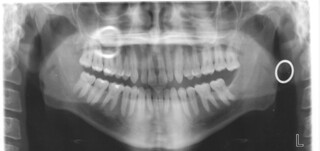
X-ray of teeth (Photo credit: jfraser)


  • Examining X-rays
  • Cleaning
  • Removing Decay
  • Filling Cavities
  • Tooth Extraction
  • Full Mouth Restoration (root canals, crowns and bridge work, veneer work)
  • Minor Surgical Procedures
  • Realigning Tempo Mandibular Joint (TMJ)
  • Treating Gum Disease
  • Performing Surgery (to correct facial and dental deformities caused by accidents or birth defects)
  • Cosmetic Work (brightening and straightening teeth)
  • Making Models & Taking Measurements for Dentures (and other procedures) 
  • Procedural Follow Up
  • Patient Education


During a typical day, a general dentist may do one to two crowns, 10-20 fillings, extract a few teeth, perhaps do a basic root canal, and also check and examine about 15 patients that had their teeth cleaned with the hygienists.

Dentists also administer various anaesthetics (see below) and prescribe antibiotics and other medications. Since restorative dental procedures and cosmetic dentistry have become more popular over the years, a typical may include doing some of those procedures as well.

Depending upon a dentist's staff, most dental offices schedule three to four patients within the same time period. This way, two patients are seen by dental hygienists having their teeth cleaned -- usually followed by a brief evaluation by the dentist -- while the other two patients are in rooms with dental assistants followed by dental treatments with the dentist.

Some patients choose to have a comprehensive exam to establish an ongoing treatment plan. A full set of X-rays are taken, the patient's gingivitis and tongue are examined, the bone structures are evaluated, and even the function of their TMJ (Tempo Mandibular Joint) is assessed. The dentist will derive a plan and outline any procedures necessary on how to create a fully functioning, healthy mouth and furthermore, how to keep it healthy.  Likewise, if there are needs to be addressed such as broken, decayed or missing teeth, cosmetic options, etc., those can be discussed and planned as well.

Laughing Gas (novel)
Laughing Gas (novel) (Photo credit: Wikipedia)
Dentists and their staff, not unlike some other medical practices, need to be aware of their patients’ general health industry. They also need to be prepared to treat patients’ possible stress and anxiety before having a procedure. This is not only to protect the patient’s overall health, but also provide peace of mind and comfort. The diminution and/or prevention of pain is an integral part of many dental procedures today including a variety of topical anaesthetics, laser drills, electronically delivered anaesthesia, nitrous oxide (laughing gas), intravenous sedation, oral sedation, and even general anaesthesia (typically not done in a dentist’s office).

Like general practice physicians and many other doctors/health care specialists, dentists treat and interact with wide diversity of the population regarding sex, age, ethnicity, background, state of health, etc. Each patient’s mouth is different, which means the dentist has to provide specific treatments for each individual. This, in turn, makes workdays varied and interesting, even while looking into people’s oral cavities all day. A typical day usually ends with writing and reviewing the charts of each patient seen that day.

Dentists periodically meet with supply representatives, talk on the phone with lab technicians, perform accounting and bookkeeping tasks, and oversee/manage their staff. They may also teach at local or regional dental schools or sit on health-related committees/boards. Essentially, a dental practice is similar to a small business that must run efficiently to fulfil its goal of treating patients.

In addition to a steady income and the nice lifestyle, dentistry offers flexibility, which is something many other doctorate-level practices don’t. Private practitioner dentists have the option of working either full- or part-time.  Similarly, they can choose their own hours and structure their lives based on their personal proclivities and professional needs. Many choose to work four or four-and-a-half days per week. In their off hours, some dentists pursue other profitable activities outside of their practice.  For example, the founder of the international animatronics and dark rides firm, Sally Corporation, which is headquartered in downtown Jacksonville, Florida, was founded by a local dentist/inventor. He'd first built a "female" talking robot head, which he called "Sally," to instruct his patients about the importance of in-home brushing and flossing. One thing lead to another and now Sally Corporation is known the world over.

In this article, I discussed a typical work day/week of a private practice dentist. I outlined the various procedures a dentist (and his/her staff) does, discussed anaesthetic options most widely used prior to various procedures, and gave an overview of the advantages a private dental practice provides regarding lifestyle and practice options.  If you found this article useful, please leave a relevant comment below and feel free to share and repost it.

Rick Fromme combines entrepreneurial enthusiasm with an insider's knowledge of the medical industry to co-found MedMasters.com. Both his drive and perspective helps provide health care professionals with a superior mechanism with which to communicate, network and market their strengths. Prior to founding MedMasters.com, Rick operated a highly successful medical device distributorship. Other milestones in his 12-year career in the medical industry include a key position at a medical device start-up company that was later sold to the Ethicon Endo division of Johnson & Johnson. You may reach Rick by connecting with him on Facebook, Twitter, Google+, LinkedIn and YouTube. 


Enhanced by Zemanta