Showing posts with label Cyber Attack. Show all posts

Saturday, June 28, 2014

Health Care Scare: Medical Identity Theft

By Rick Fromme

Computer Security
Computer Security (Photo credit: IntelFreePress)
With July 4th fast approaching, many of us will celebrate our national holiday spending time with family and friends barbequing, hanging out together in the long summer evening, and perhaps watching fireworks.

The Fourth of July or Independence Day, as it’s officially called, commemorates the ratification and adoption of our Declaration of Independence in 1776, as the 13 original states declared their independence from the Kingdom of Great Britain. Our fledgling country had won its freedom from foreign tyranny.

Today, although we remain politically free from the yoke of any other country, the U.S. and its citizens face an ever-mounting threat on our personal freedom and identities from the continuous onslaught of cybercriminals.  These e-crooks — some independent, some as part of syndicates, and some even as foreign governments’ agencies — seek to steal our precious assets, among them, our medical care records. And despite the conveniences and efficiency that Electronic Medical Records (EMR) continue to provide, their very “cybernature” makes our most personal of private information even more vulnerable to cracking, hacking, spying and hijacking. 

With increasing frequency, cyber criminals are focusing their nefarious efforts on medical identity theft. Why? According to Larry Ponemon, founder of the Ponemon Institute, “in the world of black market information, a medical record is considered more valuable than everything else.” Released in March, Its Fourth Annual Benchmark Study on Patient Privacy & Data Security specifically focused on “new and expanded threats to the security and privacy of patient information in the U.S. health care system.”


hacking in a suite at clarion
Hacking in a suite at clarion (Photo credit: Johan Nilsson)
The report’s disturbing conclusion: Criminal attacks on health care systems have risen 100% since it first conducted its studies in 2010.  This, according to nearly a hundred different health care organizations that participated in the study. These included hospitals and clinics that were part of a health care network, integrated delivery systems, along with individual hospitals and clinics. All organizations in this research were subjected to HIPAA as a covered entity.

Credit card information has long been one of the coveted “jewels” that criminals like to get their dirty hands on. Specifically relating to health care identity theft, these ne’er-do-wells seek to obtain such information as Social Security numbers and personal health records, as this type of data is stored much longer versus credit card numbers (in most cases).

Several studies have indicated that sloppy behavior, such as health care employees losing a laptop or other mobile devices that have unencrypted data, is one of the main avenues would-be criminals use to scarf up our private medical information.  Contributing to the likelihood of this occurrence is the often times rushed nature of a health care employee’s job. So focused can a provider be in terms of taking care of patients, they inadvertently compromise their attention to security.

Breaches can also result from third-party contractors who can get their hands on public medical data. The continuing proliferation of ever more sophisticated mobile devices makes it even easier for criminals to steal data, especially when you consider 88 % of medical facilities 
permit employees to access patient data via their own mobile devices. Think about that for a moment. What percentage of these employees do you think have the necessary encryption software and other security measures in place on their tablets or smartphones?

Even visiting the hospital one time — say for a routine exam — can give six to 10 companies virtually unrestricted access to one’s medical data. This includes the hospital itself, extraneous labs, specialty providers, health insurance companies, pharmacies, medical equipment providers and other entities.


Anonymous Attack
Anonymous Attack (Photo credit: HonestReporting.com)
While the implementation of the Affordable Health Care Act (ACA or ObamaCare) has been lauded by some and cursed by others, the Ponemon study reported unequivocally that nearly 70% of its participants felt the ACA “significantly increases” or “increases” the risk to patient privacy and security. Of primary concern is the insecure exchange of patient information between health care providers and the government. FYI: Several U.S. agencies have been repeatedly hacked, including by elements of the Chinese government. Check out this blog by Internet experts, Working the Web to Win, “How Close is the US to Experiencing a Digital Pearl Harbor?” Another concern regarding the ACA was the volume of patient data existing on insecure databases, and applicants registering for the ACA on insecure websites.


Of course, health care employees are health care consumers as well. Regardless of one’s specialty, you or your family members are no doubt periodically in need of routine exams, checkups, and medical care. That means your medical records are vulnerable, too.
  
According to the Federal Trade Commission:

“A thief may use your name or health insurance numbers to see a doctor, get prescription drugs, file claims with your insurance provider, or get other care. If the thief’s health information is mixed with yours, your treatment, insurance and payment records, and credit report may be affected.

If you see signs of medical identity theft, order copies of your records and check for mistakes. You have the right to see your records and have mistakes corrected.”

It also makes the following recommendations:
Credit Card Theft
Identity Theft (Photo credit: Don Hankins)

Read your medical and insurance statements regularly and completely. They can show warning signs of identity theft. Read the Explanation of Benefits (EOB) statement or Medicare Summary Notice that your health plan sends after treatment. Check the name of the provider, the date of service, and the service provided. Do the claims paid match the care you received? If you see a mistake, contact your health provider and report the problem.

Other signs of medical identity theft:
  • A bill for medical services you didn’t receive
  • A call from a debt collector about a medical debt you don’t owe
  • Medical collection notices on your credit report that you don’t recognize
  • A notice from your health plan, saying you reached your benefit limit
  • A denial of insurance because your medical records show a condition you don’t have

In this article, I talked about the ever-growing problem of Electronic Medical Record (EMR) identity theft. I shared information compiled from a respected annual, national study that found medical record hacking and theft is growing rapidly. I also shared some of  the causes of increased medical identity theft, from the proliferation of unsecured mobile devices to the implementation of the ACA. I also offered some suggestions about what health care providers — who are also health care consumers — should do to help minimize breaches of their own and their families’medical records.  If you found this article helpful, please leave a comment and share it with your colleagues, family and friends. As always, I appreciate your comments.

Rick Fromme combines entrepreneurial enthusiasm with an insider's knowledge of the medical industry to co-found MedMasters.com. Both his drive and perspective helps provide health care professionals with a superior mechanism with which to communicate, network and market their strengths. Prior to founding MedMasters.com, Rick operated a highly successful medical device distributorship. Other milestones in his 12-year career in the medical industry include a key position at a medical device start-up company that was later sold to the Ethicon Endo division of Johnson & Johnson. You may also reach Rick by connecting with him on Facebook, Twitter, Google+, LinkedIn and YouTube. 

Related Articles

Friday, May 2, 2014

Medical Device Sales: “Fascinating, Captain!” Part 2

By Rick Fromme


The Yes Album
The Yes Album (Photo credit: Wikipedia)
Oxymorons, you gotta’ love ‘em. Oftentimes these pithy, contrariwise phrases and expressions can say
volumes just by the juxtaposition of their antonym-like words. Here are but a few: Jumbo Shrimp, Civil War, Clearly Misunderstood, Icy Hot, Same Difference, Ill Health, even Health Care ... and many others.

One of my favorites is the title of a song by the award-winning, decades-old prog rock group, Yes, from it's third release, "The Yes Album." The clever song title is appropriate to life in general and, in particular, the medical technology field: Perpetual Change.

Think about it. For centuries, as long as humans have been practicing the medicinal arts, we’ve continually sought about discovering or creating new-and-improved tools to help in the diagnose, treatment, prevention and/or elimination of disease. Every quarter there are new advances in a wide range of technologies (and pharmaceuticals) that will impact our health. Again, in this ongoing series, “Fascinating Captain!” I intend to share with you recent advances in the perpetually changing field of health care technology.

Without further adieu, here’s a synopsis of some of the latest medical technology articles pertaining to a field that's perpetually changing:

FDA Medical Device Proposal Would Develop Faster Path to Market for Breakthrough Technologies

English: Logo of the .
(Photo credit: Wikipedia)
A new FDA proposal would give some devices serving a critical need a faster path to market. In that regard, it would be similar to the breakthrough therapy program currently enacted for pharmaceuticals.  The FDA, which has sometimes been criticized that it hasn’t done enough to support the U.S. medical device industry, has proposed a program that would encourage more interaction at earlier stages of product development between companies and the FDA’s regulator staff. Let’s hope the process proves proportionately shorter than its name: Expedited Access Premarket Approval Application for Unmet Medical Needs for Life Threatening or Irreversibly Debilitating Diseases or Conditions.


To gain expedited approval, medical devices would need to:

∙ Treat or diagnose a life-threatening or irreversibly debilitating disease or condition
∙ Address lack of approved alternative treatment/diagnostic exits
∙ Be a breakthrough technology that provides a clinically meaningful advantage over existing technology
∙ Be a technology where its availability is in the patient’s best interest
∙ Have an acceptable data development plan that has been approved by the FDA

How Technology Will Drive the Promising Future of Medicine

Star Trek: McCoy
Star Trek: McCoy (Photo credit: JD Hancock)
In addition to helping cure injury and disease, medical technology is moving in the direction of prevention of illness and disease.  In fact, posits the author, “It is now moving so rapidly that within a decade the small handheld medical reader used by Dr. Leonard McCoy in ‘Star Trek’ the tricorder will look primitive. We are moving into an era of data-driven, crowd-sourced, participatory, genomics-based medicine.”

Just as our bathroom scales give us an instant reading of our weight, and thermometers our internal body temperature, tomorrow’s wearable devices (and even some of today’s smart phones) will be able monitor, measure and assess various aspects of our health and well-being, and can alert us when we’re going to get sick or perhaps suffer from an imminent injury (due to a weak muscle, tendon, etc.).  Because we’ll have a better “window” into what’s going on aside us in real time, doctors and perhaps even our artificial devices themselves will be able to prescribe medicines, therapies or suggest lifestyle changes based on our full medical history, holistic self and genetic composition.

“Our smartphones will become a medical device akin to the ‘Star Trek’ tricorder,”states the author.

New, Smaller Pacemaker Installed for First Time in Southern California 

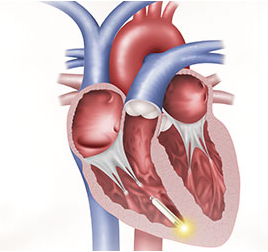
A new medical advancement in wireless pacemakers was installed for the first time in Southern California into an 83-year-old woman at San Diego's Scripps Memorial Hospital. Called the Nanostim Leadless Pacemaker, the wireless device is one-tenth the size of traditional pacemakers.  According to the hospital’s officials, while still in the research phase, the Nanostim is the world’s first pacemaker that is completely implanted into a patient’s heart. The doctor who performed the surgery guided the pacemaker through a vein in the patient's groin all into her heart’s right ventricle, where, like a space station, it “undocked” to remain inside her body to perform for the next 18 years.  

Since the Nanostim is still in the research phase, potential recipients are being carefully selected. Researchers expect 600 or so procedures are needed before the FDA will make an approval decision.

Medical Devices at Risk from Cyber Attack

Having just positively reflected upon the benefits of emerging medical technologies and devices, the medical industry at-large faces a serious issue.

According to the article, “Medical devices that use a wireless connection such as pacemakers, defibrillators, monitors and insulin pumps, as well as automated drug distribution systems that are implanted in the bodies have all been considered to be at risk.” And no doubt, as more wireless devices/services become available, unless precautions are taken, they will also be vulnerable. This also means that entire health care facilities’ data storage systems are susceptible to attack. Imagine ... medical records, billing information, patients’ and hospital personnel’s key information could all be hacked, and even tampered with.

Here’s a statement from the article that’ll jump your heart into arrhythmia ... It’s by Gunter Ollmann, CTO for IOActive, who says, “The medical industry is not a thought leader of information security – it is still largely playing catch up. When I look at implanted medical technology, it is pretty scary stuff.”

Anti-fungal Coating for Medical Devices

Like bacterial and viruses, microbial fungi are everywhere, hence the popular phrase, "fungus among us." Fungal films coat common surfaces we come into to contact with every day, and a fog of microscopic spores permeates the air (a big “Ewwwwwww!”). Thankfully, these ubiquitous microbes usually cause us no harm, but opportunistic species can take advantage of some people’s compromised immune systems, thus instigating possibly dangerous infections.  For example, AIDS patients or those going through chemotherapy, inserted or implanted medical devices can serve as opportunistic vehicles for these pathogenic fungi. A team of Spanish researchers have been developing a coating for the rubber surfaces of medical devices that releases antifungal drugs when fungi are present (a big “¡Olé!”). Their strategy involves ergosterol, a cholesterol-like component of fungus cell membranes that isn’t found in mammalian membranes. While the researchers still need to prove the materials are safe and effective inside the body, future applications may include helping control fungal growth on food packaging.

Apple Adds Another Medical Device Expert

Mac medicine, anyone? According to recent reports, Apple has hired Divya Nag, a high profile medical device expert, to its ever-growing team of health-related researchers, developers, and industry strategists. Nag's former company, Stem Cell Theranostics, a drug-testing company, developed a new technology, the induced pluripotent stem cell. It turns cells — usually from a piece of skin — into embryonic-like stem cells, then uses them to create heart cells. She also founded StartX, which helps medical technology startups get on their feet.

As the article states: “Apple’s hiring of Nag is the company’s latest personnel acquisition in what has become a headline-generating pattern throughout 2014, as the company continues expanding its body of health-related experts.”

Naturally, these types of announcements continue to generate industry speculation about what new health-related technologies Apple may be developing.

Nanotechnology News: Mini-Robots May One Day Assemble Medical Devices Inside Your Body

While “Star Trek” creator, Gene Roddenberry, was certainly ahead of his time, one idea he didn’t introduce on his original TV series: mini-robots that could perform delicate tasks inside your body, including assembling medical devices within your own bloodstream.  New nanotechnology research published in “Advanced Functional Materials” recently provided some of the groundwork necessary to one day develop mini-robots that could perform delicate tasks inside your body.

Of course, having a piece of technology that floats and functions through our innards isn’t new; since 2001, the FDA approved the use of endoscopic camera pills to course through and take pix of our gastrointestinal systems.

“Nano Lego”? Nanorobots enable production in several types of items and operations. While sounding like something we’d expect to hear several years from now, already, experiments using magnetic materials have demonstrated nanorobots are capable of transporting small objects and building bridges from rods. In addition to nanotechnology’s anticipated benefits for in health care, it promises two other major advantages: as the volume of nanotechnology robotics increases, the cost will come down; and it’s anticipated the U.S.’ research and development in the science will create more jobs in the future.

New Device for Migraine Sufferers

As many as 36 million Americans suffer from migraines.  These stop-you-in-the-middle-of-your-tracks headaches are a very complex disorder that involves blood vessels and nerves. It affects sufferer's heads, digestive systems (hence the nausea many experience during an attack), and causes other painful physical sensations -- even temporary blindness in some.

Now there's a wearable new device, called the Cefaly, which is designed to target a specific nerve in people's head's that's major factor in causing migraines.  The Ceflay sends out signals that interrupts that key nerve's biochemical function.

Meant to be worn 20 minutes every day, a study found it reduced the number of migraines per month -- but unfortunately not their severity. Talk about oxymorons ... the most common side effect was a mild headache after the treatment session. Some mild sleepiness during the session was also reported.  Last month, when it was approved in Canada, the Ceflay sold for $2,550.

It's hoped that once approved in the US, the Ceflay will help offset the cost of OTC and oftentimes expensive prescription migraine drugs, not to mention the costs of missed work days, etc. It could also be a boon to migraneurs because of not having many adverse side effects.


In this second installment of “Fascinating, Captain!” I shared some of the latest innovations and trends in medical technology featured in the news recently. If you found this article useful and informative, please leave a comment below. Also, feel free to share it with your colleagues and friends.

Rick Fromme combines entrepreneurial enthusiasm with an insider's knowledge of the medical industry to co-found MedMasters.com. Both his drive and perspective helps provide health care professionals with a superior mechanism with which to communicate, network and market their strengths. Prior to founding MedMasters.com, Rick operated a highly successful medical device distributorship. Other milestones in his 12-year career in the medical industry include a key position at a medical device start-up company that was later sold to the Ethicon Endo division of Johnson & Johnson. You may reach Rick by connecting with him on Facebook, Twitter, Google+, LinkedIn and YouTube